Cat Breeds, Cat Care, Cat Training
Norwegian Forest Cat Breed Profile, Characteristics & Care
Mar
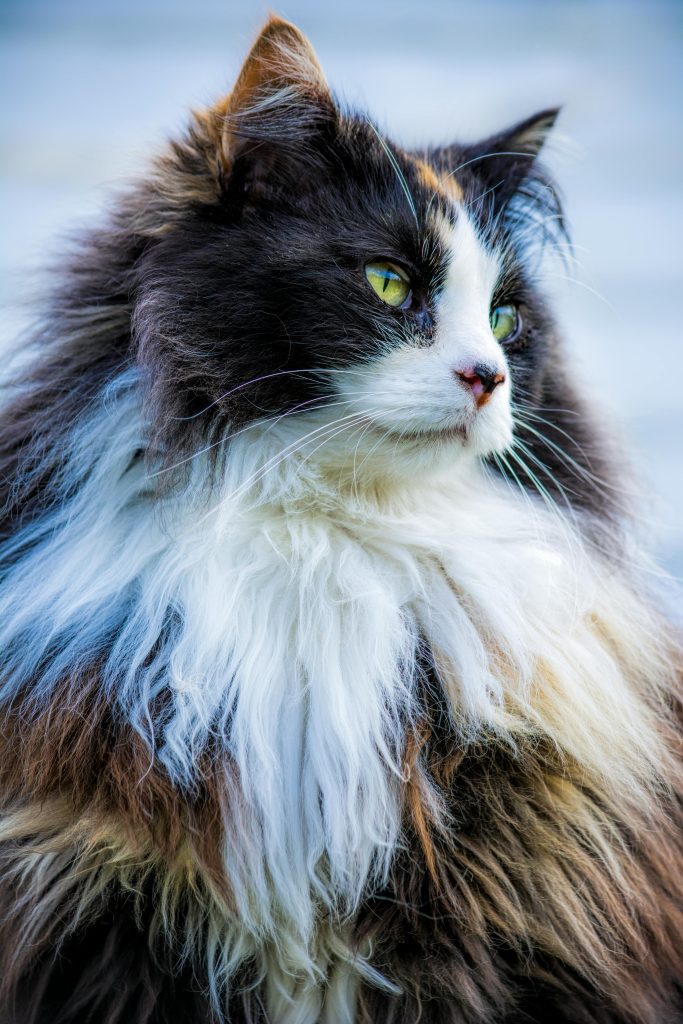
Ask any avid cat lover to describe their ultimate feline companion, and you might find yourself painted a picture of one of the most majestic domestic cat breeds—the Norwegian Forest Cat. Known for their long, flowing coat, bushy tail, and striking almond-shaped eyes, these gentle giants have inspired Norwegian fairytales and myths with their regal presence.
Let’s unravel the enchanting story of these ancient cats who once roamed the woods of Norway, explore their unique physical and behavioural traits, offer valuable care tips, and share fascinating facts about one of the most beloved feline breeds.
Breed Profile
The Norwegian Forest Cat, or “Norsk Skogkatt,” as the Norwegians call it, has a history as rich and robust as its fur. These domestic cats have ancient roots dating to the Viking era and beyond. Hailing from the Norwegian forests and adapting to the harsh Nordic climate, they are a product of natural selection, which favoured those with survival and hunting skills.
The breed’s history is filled with tales, one of which suggests that the Norwegian Forest Cat is a close relative of the skogkatt, a mountain-dwelling lynx type found in Norwegian forests. Their long, water-resistant fur, tufted ears, and bushy tails are thought to be traits specifically designed to endure Norway’s cold, wet climate.
For centuries, these cats lived as semi-wild creatures, adept at climbing and surviving the rugged life of a forest dweller. Over time, they became the mousers of Norwegian farmsteads, barns, and homes. However, it wasn’t until the late 20th century that formal recognition led to the preservation of the breed’s unique characteristics, with breeders working to solidify their traits while maintaining their natural and robust health.
Physical Characteristics
At first glance, the Norwegian Forest Cat is a bobtail away from fitting the description of the mystical Norwegian forest cat seen in fairytales. They are large, well-muscled cats with strong bones and a bit of heft. Their bodies are long, substantial, and rectangular, and their hind legs are slightly longer than the front, which gives them a majestic stride that reflects their wild past.
Size and Structure
A full-grown Norwegian Forest Cat is an impressive sight. Males generally weigh between 13 to 22 pounds, with females slightly smaller at 9 to 18 pounds. They are slow to mature, reaching their full size and development at around five years of age.
This long growth period is a reflection of their Nordic ancestry, where harsh living conditions required strong and resilient cats to survive.
Coat, Colours, and Patterns
The Norwegian’s most distinct and recognisable feature is its double-layered coat. The water-repellent topcoat is long, and the soft, downy undercoat is dense to provide insulation against the cold.
Their coat comes in a variety of colours and patterns, with the most common being brown tabby. However, this royal breed also sports a range of beauties like white, black, blue, red, cream, silver, and golden. They can also have white accents, such as a bib, chest spot, and paw pads.
The intricate patterns these cats come in are yet another marvel. From classic tabby stripes to tortoiseshell splashes and bi-colour combinations like white and black, any coat pattern you can think of is possible in this breed.
Distinct Features
Their large almond-shaped eyes, which can be green, gold, or copper in colour, peer out from a sweet expression of the face with a straight profile. They have a long, bushy tail that helps them maintain balance when climbing or leaping—an essential tool from their days in the trees of the Norwegian forests.
Their tufted ears, heavy whiskers, and large paws with tufts of fur between the toes are distinct features that make them stand out from other domestic breeds.
Personality Traits
Don’t be fooled by their regal demeanour, the Norwegian Forest Cat is renowned for being a gentle giant. They are known for their friendly nature, intelligence, and playful spirit. These are independent yet affectionate cats, content to explore their territory but always happy to return for some cuddle time.
Temperament and Behaviour
Norwegian Forest Cats are social creatures that enjoy human company, but they retain a bit of that untamed spirit and independence. They are excellent hunters and love chasing toys, so interactive play is a must to keep them healthy and happy.
Despite their size, they are also known for their agility and can often be found perched high, surveying their kingdom from a favourite vantage point. They are not overly vocal cats, but they will communicate through chirps, trills and meows when they want your attention.
Relationships with Owners and Other Pets
They aren’t the type for incessant meowing or neediness, but they will form strong bonds with their owners. They are known to follow their favourite human around the house, offering their version of help with whatever chores are at hand.
Norwegian Forest Cats generally get along well with other pets if introduced properly, especially if those pets respect the Norwegian’s gentle nature and personal space. However, small rodents might bring out the hunting instincts of these skilled predators.
Health and Care Tips
When it comes to caring for a Norwegian Forest Cat, their wild ancestors give us some clues about their needs. Their dense, water-resistant coat serves them well against the elements but also requires a certain level of upkeep.
Grooming Needs
The Norwegian’s double coat needs regular grooming to keep it in good condition. Their fur, while not prone to matting from lack of grooming, can become a magnet for dirt and debris.
Daily brushing helps to remove loose hair, prevent tangles and keep their coat shiny. They also shed more heavily twice a year as the seasons change, and extra grooming during these periods will help minimise shedding around your home.
Dietary Considerations
With a history of hunting and surviving in the wild, these cats have a strong natural hunting instinct and thrive on a diet that reflects that.
A high-protein, balanced cat food is recommended to keep Norwegian Forest Cats in top form. If their diet is not monitored, they can be prone to obesity, so a measured approach to feeding is advised.
Adequate water intake is also crucial for their overall health. An automatic water dispenser can be an effective way to ensure your cat stays hydrated.
Common Health Issues
Norwegian Forest Cats are generally healthy and hardy animals, but like all breeds, they have their predispositions.
Some common health issues to watch out for include hip dysplasia, heart disease, and a genetic condition called glycogen storage disease type IV. Regular vet checkups are essential in maintaining the Norwegian’s robust health.
Hypertrophic cardiomyopathy (HCM), a heart condition, is known to affect some Norwegian Forest Cats, so regular vet check-ups are crucial to monitor their heart health.
They can also be prone to polycystic kidney disease, an inherited condition that often doesn’t show symptoms until a cat is older. So, regular check-ups and early detection are crucial for managing the condition if it arises. In addition, some breeders may screen their cats for this condition before breeding to eliminate it from the gene pool.
Interesting Facts
Beyond the care and characteristics of the breed, Norwegian Forest Cats have many unique traits that make them stand out among their feline peers.
Unique Traits and Characteristics
One fascinating aspect of the Norwegian Forest Cat is the tufts of fur between their toes, a feature also found in their distant relative, the Maine Coon. These toe tufts, or “snowshoes,” help them to walk on top of snow and ice.
Additionally, their ears are adorned with ear furnishings and lynx tips, further protecting them from the elements.
Their dense double coat also sheds water, keeping them dry and comfortable in their native forests. They are also acrobatic climbers, thanks to their strong hind legs and agile bodies.
Fun Anecdotes or Historical Facts
The Norwegian Forest Cat’s storied past includes tales of Norse mythology and its connections to Freyja, the goddess of love, fertility, and cats.
A legend tells of the chariot of Freyja, drawn by two large Norwegian Forest Cats that had a plumelike tale, representing their agility in Siberia, where the legend originated. It is also said that when Freyja cries, the Norwegian Forest Cat catches her tears in its fur and then spreads them as dewdrops over the earth.
In Norway, Norwegian Forest Cats are known as “Norsk Skogkatt,” meaning “Norwegian forest cat.” They were also featured on a postage stamp in 1996 to honour their contribution to the Norwegian identity.
Conclusion
The Norwegian Forest Cat is a breed that truly encapsulates the best of both worlds – the rugged wildness of its Norwegian homesteads and the gentle warmth of a loving domestic pet. With their striking looks, enchanting history, and loving nature, these cats make a loyal and loving addition to any household.
If you’re considering welcoming one into your home, remember that caring for a Norwegian Forest Cat involves respecting their unique needs and appreciating their personality. With proper care, a healthy diet, and plenty of love and attention, your Norwegian Forest Cat companion will surely grace your life with joy for years to come. So why not start your journey with this royal breed today?
These were some interesting facts about the Norwegian Forest Cat that make them a truly unique and captivating breed. Whether you are drawn to their stunning looks or their playful personality, there is no denying the charm and beauty of these majestic cats.